History of Arcade Games: From the 80s to Today
A journey through arcade game history: the golden age of the 80s, the boom of the 90s, the fall of arcades, and their comeback through mobile, indie, and web games.
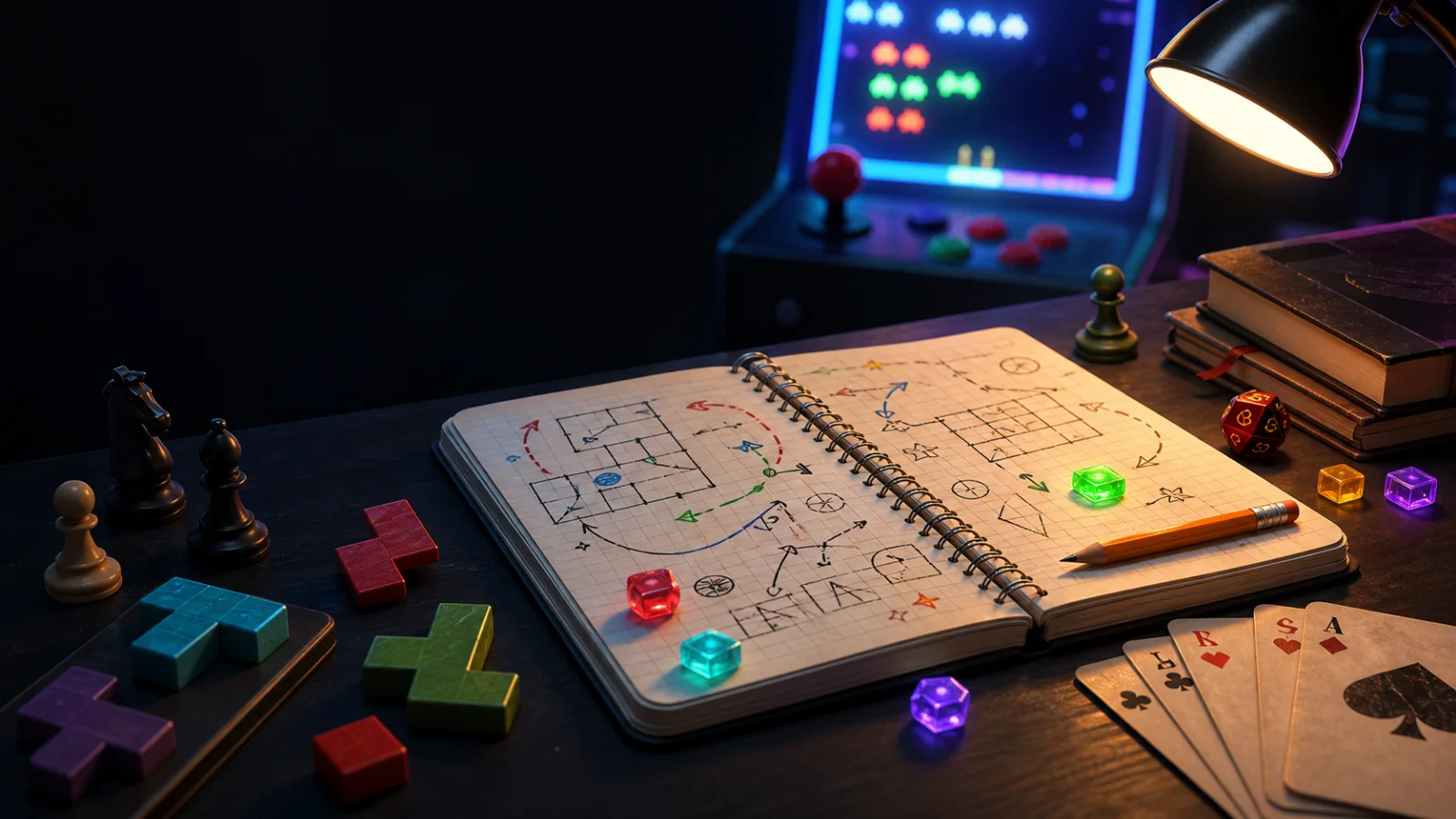
Arcade games were built to grab your attention in seconds. They did not ask for long tutorials or twenty-hour campaigns: they wanted a coin, a joystick, a clear rule set, and a difficulty curve that made you want one more try. That philosophy is still alive today, even inside many modern mobile, web, and indie games.
The 80s: The Golden Age
The true explosion came in the late 70s and early 80s with early space-defense shooters, chase mazes, platform games, and wave-based shoot 'em ups. Arcades became social hubs, and video games moved from tech novelty to cultural phenomenon. Design revolved around three ideas: understand the game instantly, survive as long as possible, and chase a higher score every run.
Why They Worked So Well
Technical limits forced designers to be brilliant with very little. Simple graphics, minimal controls, and progression built on speed, patterns, and pressure. That structure was perfect for a quick session, but also for creating competitive obsession: you always felt you could do better than last time.
The 90s: Bigger, Louder, Broader
In the 90s, arcade gaming became bigger, louder, and more diverse. Beat 'em ups, harder shooters, fighting games like Street Fighter II, racing cabinets, and co-op machines all expanded the scene. The arcade was no longer just one machine and one scoreboard: it became a social spectacle where players watched, competed, and learned from whoever was standing next to them.
The Decline of the Arcade Hall
As home consoles improved, much of that experience moved into the living room. Arcade cabinets were still impressive, but it became harder to justify the trip when home systems offered more comfort and longer sessions. In many countries, arcade halls steadily declined through the late 90s and 2000s.
The Legacy Never Disappeared
Even when physical arcades faded, arcade design language survived. It lived on through score-chasing games, survival modes, online leaderboards, “easy to learn, hard to master” design, and the addictive power of short repeatable runs. Even genres that look very different today still use arcade DNA: fast restarts, readable visuals, instant feedback, and mastery through repetition.
From Indie to Mobile and the Web
The next big revival came through three paths: indie development, mobile gaming, and browser games. Small studios embraced arcade purity because it allowed them to build intense, elegant, highly replayable games without massive budgets. Mobile gaming loved short sessions and instant reflex play. And the web opened another door: click, play immediately, and try again with no download friction.
What Has Stayed the Same
Screens, business models, and distribution changed, but the foundations stayed the same. A strong modern arcade game still needs instant readability, excellent tactile or visual response, a finely tuned difficulty curve, and a clear reason to press “one more run.” The context changed; the design magic did not.
Why This History Still Matters
Understanding arcade history helps you understand modern game design as a whole. Many of the industry's best ideas were forged there: the short loop, time pressure, the scoreboard, incremental improvement, minimal controls, and the joy of replaying until mastery. Arcade games are not a relic of the past; they are one of the foundations of the language of games today.
Keep exploring
How to Master Snake: Strategies and Tips for the Best Score
Learn the best Snake strategies, from movement patterns to advanced board survival techniques.
Chess for Beginners: Complete Guide to Openings and Basic Tactics
Master chess from scratch. Learn essential openings, tactics like forks and pins, and sharpen your real-time online matches.
Solving Sudoku: Techniques from Beginner to Expert
Learn core Sudoku techniques for GameJoc: notes, limited hints, max mistakes, difficulty and scoring.
2048: Organize the Board with the Corner Strategy
Discover the corner strategy to reach 2048 and beyond. Step-by-step guide with examples.