Word Guess: Starting Words and Strategy for Chained Rounds
Game guide
Word Guess
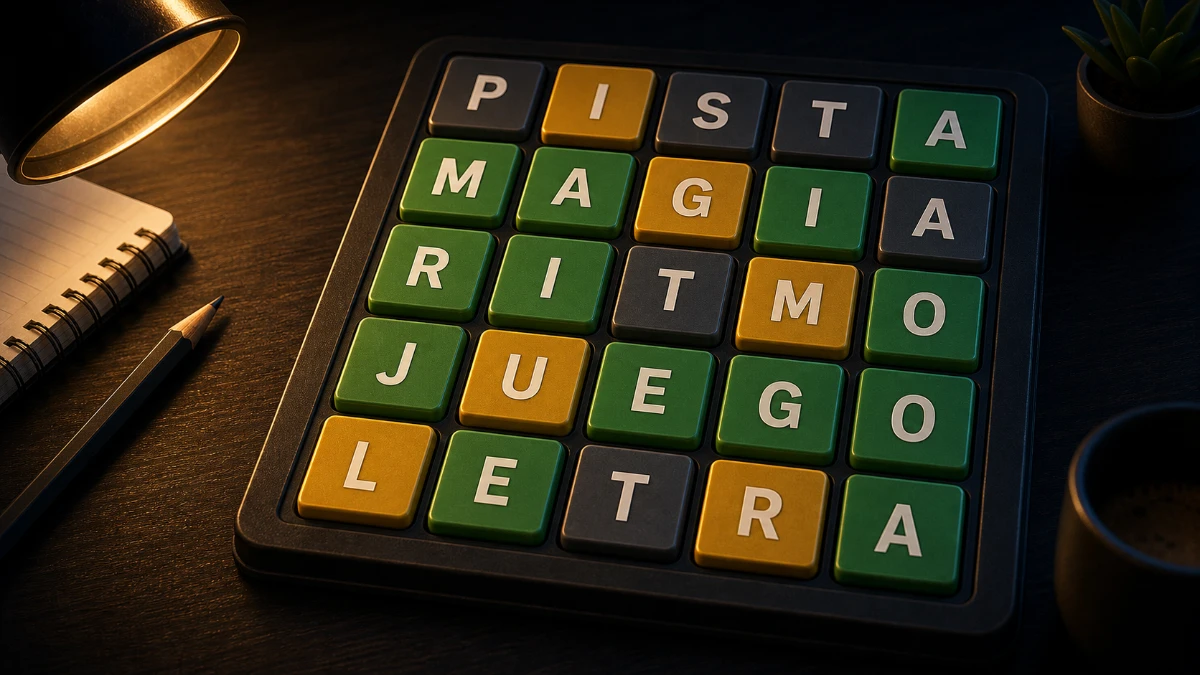
Word Guess takes Wordle's logic and turns it into an arcade run: you have 6 attempts to guess a 5-letter word, but every solve starts another round and your score keeps accumulating until you fail.
The Color System
- Green: The letter is in the correct position.
- Yellow: The letter is in the word but in a different position.
- Gray: The letter is not in the word.
The Best Starting Word (in English)
For the English mode, words covering the most frequent letters are best. "CRANE", "SLATE" or "ADIEU" cover common vowels and frequent consonants. The goal isn't to guess on the first attempt — it's to eliminate as many letters as possible.
The Second Word: Cover What You Missed
Your second word should use completely different letters from the first (except confirmed greens). If the first was "CRANE" and you got no matches, the second could be "STUMP", "MOIST", "TOILS" or "FOIST" to cover more letters.
When You Have Yellow Letters
Yellow letters are the key. You must place them in a different position from where they appeared (because you confirmed they are NOT there). And you know they're in the word, so your next attempt must include them in another position.
The Total Elimination Method
Advanced players use the first 2-3 attempts exclusively to "explore" letters, without trying to guess the word. This may sound counterproductive, but mathematically it maximizes the information gained and leaves the last attempts with near-total certainty.
What It Trains Cognitively
Word Guess trains language and verbal memory: each attempt gives clues that must be remembered, reinterpreted, and combined with vocabulary. It is a strong fit for deduction, cognitive flexibility, and letter attention.
- Skills: language, verbal memory, deduction, cognitive flexibility.
- Best-fit ages: upper primary school, secondary school, adults, older adults.
- Suggested framing: It can also fit word-game searches around dyslexia or reading support when framed as playful practice rather than intervention.
This framing describes general playful and educational uses; it does not replace professional educational, medical, or therapeutic advice.
Ready to apply these tips?
Play Word Guess now
More guides
History of Arcade Games: From the 80s to Today
A journey through arcade game history: the golden age of the 80s, the boom of the 90s, the fall of arcades, and their comeback through mobile, indie, and web games.
How to Master Snake: Strategies and Tips for the Best Score
Learn the best Snake strategies, from movement patterns to advanced board survival techniques.
Chess for Beginners: Complete Guide to Openings and Basic Tactics
Master chess from scratch. Learn essential openings, tactics like forks and pins, and sharpen your real-time online matches.
Solving Sudoku: Techniques from Beginner to Expert
Learn core Sudoku techniques for GameJoc: notes, limited hints, max mistakes, difficulty and scoring.