Tap & Fly: The Perfect Rhythm to Surpass 100 Points
Game guide
Tap & Fly
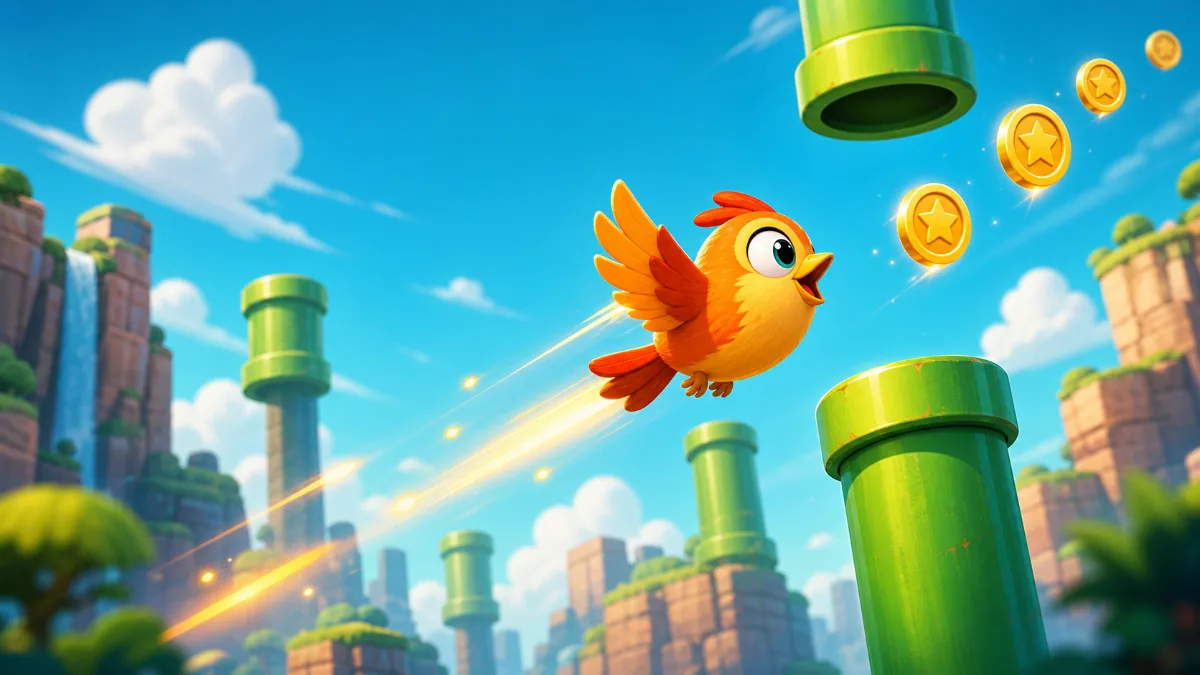
Tap & Fly belongs to the "Flappy" genre where controlling simulated gravity is everything. 90% of deaths come from the same mistake: panic. Learning to maintain calm and rhythm matters more than quick reflexes.
Understand the Physics: Accumulated Gravity
Each tap adds upward impulse, but gravity always pulls down and accumulates. Stop tapping for 1 second: you fall slowly. Stop for 2 seconds: you fall fast. Stop for 3 seconds: you plummet. The key is never letting fall speed accumulate too much.
Optimal Height: Always a Third From the Bottom
The ideal flight height is roughly the lower third of each obstacle's gap. Why? Because if the next obstacle's gap is higher, you only need to rise. If it's lower, you can descend in a controlled manner. Flying high leaves no margin to drop quickly.
The Rhythm: Short and Frequent Taps
Each tap applies a fixed impulse: holding does not create a bigger jump. The correct rhythm is brief and frequent, like tapping the beat of a slow song. This lets you adjust height without panic.
Look at the Next Gap, Not the Pipes
Classic mistake: watching the obstacle walls. Train your eyes to look at the center of the gap in the next obstacle. That's your target. The walls are visual noise — the gap is the relevant information.
The Ceiling Bounces: Use It
If you hit the ceiling, you bounce downward (you don't die). In emergency situations where you're rising too fast, a controlled ceiling bounce can save you. As score climbs, speed and pressure rise; medals and skins reward consistency, not one heroic tap.
What It Trains Cognitively
Tap & Fly trains one very specific skill: impulse regulation. Tapping too much, tapping late, or panicking breaks the run. That makes it a short game for sustained attention, rhythm, and self-control.
- Skills: rhythm, sustained attention, impulse inhibition, touch coordination.
- Best-fit ages: primary school, secondary school, adults looking for quick sessions.
- Suggested framing: For primary school children it works best as a short challenge, not as a frustrating endurance test.
This framing describes general playful and educational uses; it does not replace professional educational, medical, or therapeutic advice.
Ready to apply these tips?
Play Tap & Fly now
More guides
History of Arcade Games: From the 80s to Today
A journey through arcade game history: the golden age of the 80s, the boom of the 90s, the fall of arcades, and their comeback through mobile, indie, and web games.
How to Master Snake: Strategies and Tips for the Best Score
Learn the best Snake strategies, from movement patterns to advanced board survival techniques.
Chess for Beginners: Complete Guide to Openings and Basic Tactics
Master chess from scratch. Learn essential openings, tactics like forks and pins, and sharpen your real-time online matches.
Solving Sudoku: Techniques from Beginner to Expert
Learn core Sudoku techniques for GameJoc: notes, limited hints, max mistakes, difficulty and scoring.