Block Puzzle: Guide to Mastering the Line-Clearing Arcade
Game guide
Block Puzzle
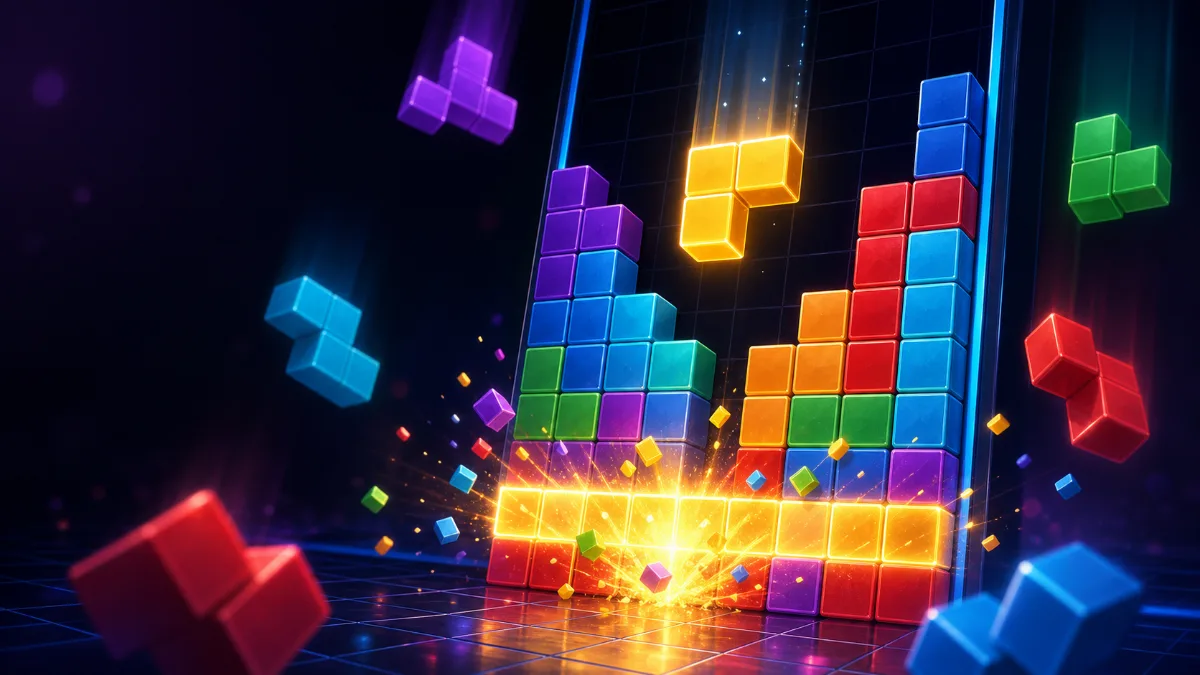
Block Puzzle is a falling-block arcade: pieces, rotation, line clears, and ever-increasing speed. The run feels simple for the first minute, but the real game starts when the stack reaches mid-board and every decision must happen almost on instinct.
The Surface of Your Stack Matters Most
Your goal is not just to survive the current piece, but to leave the board ready for the next one. Try to keep the top as flat as possible. Deep holes, sharp steps, and jagged roofs drastically reduce your options once the pace ramps up.
Keep a Lane for the Long Piece
One of the best comeback tools is leaving a relatively clean column for the long piece. If you seal it off completely, you lose the chance to erase four lines at once and turn a bad position into a great one. You do not need to force it constantly, but you should avoid closing that lane for no reason.
Late Rotation Beats Bad Placement
Many positions are saved by one final rotation near the floor. If you are choosing between dropping quickly or adjusting, it is usually worth spending a fraction of a second to find the correct turn. One badly placed piece can create a hole that haunts the next several rounds.
Single, Double, Triple, or Four-Line Clear
Clearing one line keeps the board alive; clearing several can transform the entire run. If your stack is stable, you can afford to set up a big clear. If the board is already high, prioritize survival even if it means taking a single line. The classic mistake is waiting for the perfect play and dying while holding it in mind.
When to Use Hard Drop
Hard drop is a speed tool, not a button to mash every turn. Use it when the placement is obvious or when you want to keep your tempo high. If the board is messy, dropping too early steals the reaction time you need to correct, rotate, or reposition.
What It Trains Cognitively
Block Puzzle is a natural executive-function exercise: planning gaps, imagining rotations, maintaining a board strategy, and correcting mistakes before the stack rises too high. It also trains working memory because players must remember which spaces to preserve.
- Skills: executive functions, mental rotation, working memory, planning.
- Best-fit ages: upper primary school, secondary school, adults, older adults.
- Suggested framing: For older adults it can work as a gentle visual logic puzzle when difficulty and pace are kept comfortable.
This framing describes general playful and educational uses; it does not replace professional educational, medical, or therapeutic advice.
Ready to apply these tips?
Play Block Puzzle now
More guides
History of Arcade Games: From the 80s to Today
A journey through arcade game history: the golden age of the 80s, the boom of the 90s, the fall of arcades, and their comeback through mobile, indie, and web games.
How to Master Snake: Strategies and Tips for the Best Score
Learn the best Snake strategies, from movement patterns to advanced board survival techniques.
Chess for Beginners: Complete Guide to Openings and Basic Tactics
Master chess from scratch. Learn essential openings, tactics like forks and pins, and sharpen your real-time online matches.
Solving Sudoku: Techniques from Beginner to Expert
Learn core Sudoku techniques for GameJoc: notes, limited hints, max mistakes, difficulty and scoring.